

Attack the Week (ATW)
Tremors of July / The Yen / Calendar / Dashboard Analysis / Asset Allocation / FX Book

Monday Thoughts
Another month is upon us, and I am starting it late; apologies. I was stuck on a flight coming in late last night. I thought I would rather delay than compromise the quality of this weekly editorial, which I know many of you are reading.
July was one hell of an exciting month. It had it all: epic drawdowns in tech and Kospi, a brutal realisation that Warsh indeed isn’t what it might say on the tin and then the BoJ sneakily intervened and brought the Yen’s fall to a sudden halt and a quick U-turn. It was a good month for me as I navigated more treacherous waters with innate focus and aggressive execution. I was situationally aware, some would say. Bad joke, I know.
The setup last month was indeed in favour of more volatility, and it came, although in very short spurts. Not sure how August will pan out, but from my experience, July tremors seep into August price action.
Back to the BoJ and the Yen intervention. We have opined on the main issues facing Japan in numerous posts. Below the last one from June.
The Way of the Yen

Heraclitus[1] firmly believes that language, when used well, is perfectly capable of representing reality. Yet reality, often (even in Heraclitus’s time), can be far more subtle and inconsistent than one might initially think. How, then, can we relate to a reality that often manages to break free from a context in which we can properly frame it, to another context in which that same reality eludes us? I’ll try to immerse myself in Heraclitus’s thought, unravelling the
We all are roughly familiar with Japan’s dilemma and one of the most remarkable macroeconomic contradictions in the world. The yen is trading at its cheapest level in real terms on record and appears deeply undervalued by most valuation measures. Yet it remains weak because Japan’s external surplus is now driven primarily by investment income earned on its vast overseas asset base rather than trade. As one of the world’s largest creditor nations, Japan possesses enormous foreign wealth that could eventually support the currency, but only when capital begins to return home.
Domestically, the picture is equally unusual. Japan combines one of the highest public debt burdens in the developed world with a central bank that still owns an extraordinary share of the government bond market. While long-term bond yields have already adjusted meaningfully, policy rates remain relatively accommodative, leaving the BoJ trying to balance inflation, financial stability and the growing cost of higher interest rates.
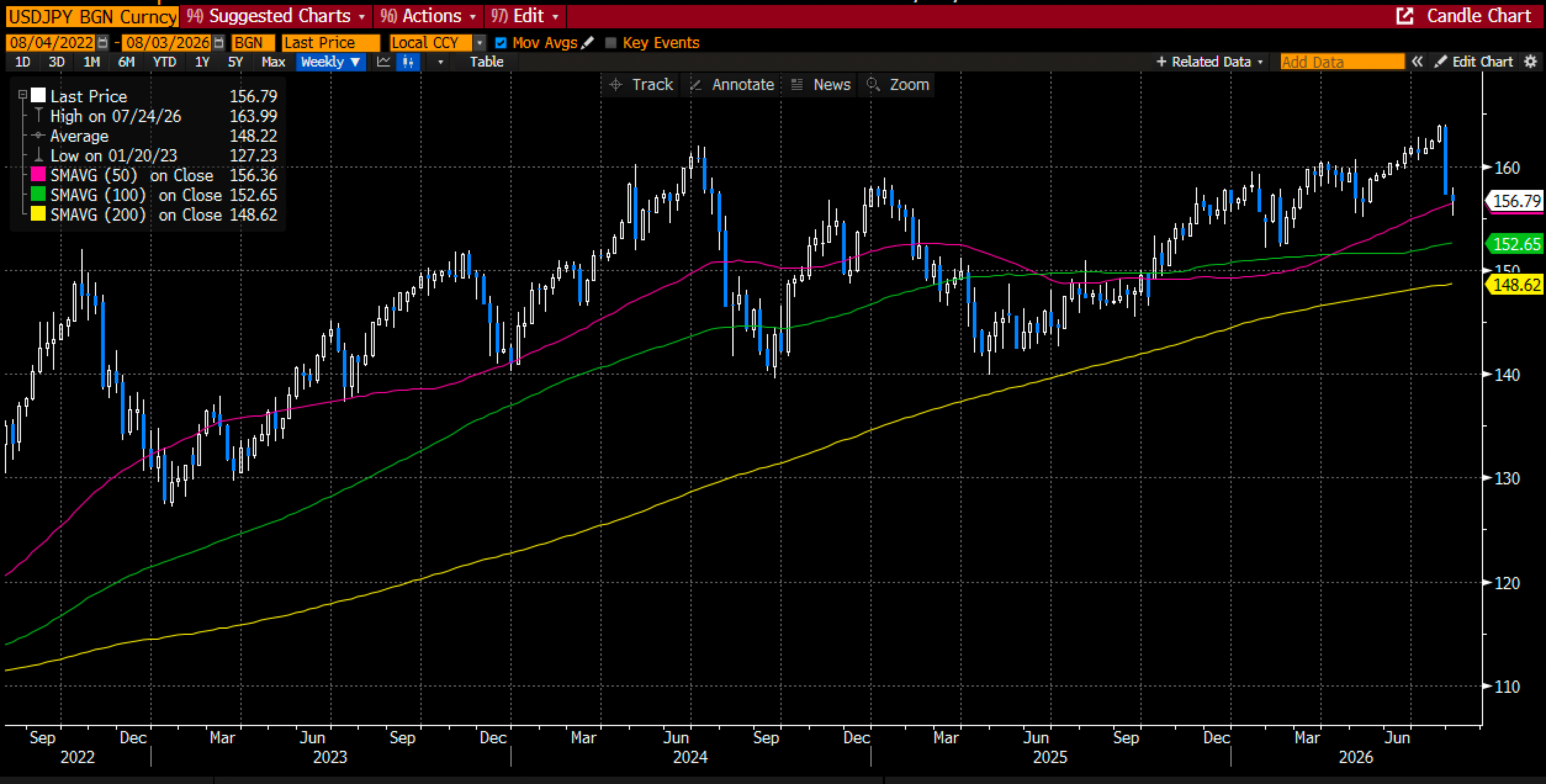
This is ultimately a story of policy inconsistency. Currency intervention may slow the yen’s decline, but it cannot sustainably reverse it while monetary and fiscal policy remain misaligned. The macro trade, while in plain sight, might be years away or just around the corner. How will you incentivise ageing domestic investors to offload their foreign holdings and reinvest at home?
I will dedicate a deep dive post to the vast opportunity set in the coming weeks.
Let’s now run with the usual line-up when we enter a new week:
Macro D’s detailed analysis and Macro FX book (up 5.22% in July)
Weekly Macro Calendar
Our detailed global macro Dashboard analysis
Weekly Asset Allocation Update (still in cash?)
So, without further ado, let’s go straight in.
